- Ben Haresign
- 25 Jun, 2026
- Finance
- 4 min read
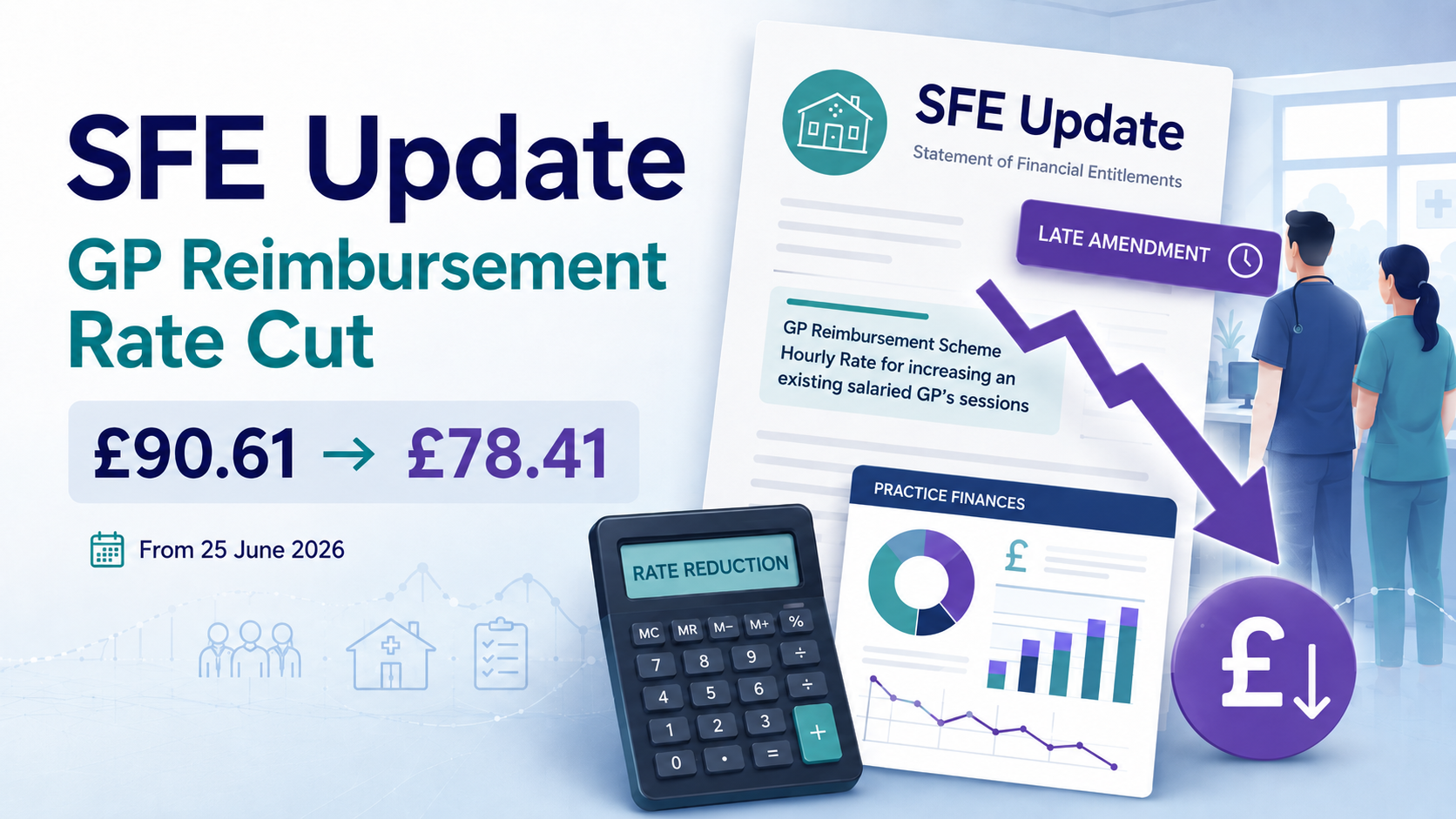
SFE Update: GP Reimbursement Scheme Hourly Rate Cut from £90.61 to £78.41
SFE Update: GP Reimbursement Scheme Hourly Rate Cut from £90.61 to £78.41
A one-page amendment to the 2026/27 GMS Statement of Financial Entitlements changes just one number — but it could create a meaningful funding shortfall for practices using the GP Reimbursement Scheme to increase an existing salaried GP’s sessions.
The revised maximum hourly reimbursement takes effect from 25 June 2026.
This is an update to our full 2026/27 SFE analysis
We previously examined the wider GMS contract funding position, including Global Sum, QOF, dispensing, workforce costs and the introduction of the GP Reimbursement Scheme.
Read our full analysis: GMS SFE 2026/27 — the key funding, QOF and contract changes
What has changed?
The General Medical Services Statement of Financial Entitlements (Amendment) (No. 2) Directions 2026 amend Section 14A of the SFE: the GP Reimbursement Scheme.
The amendment reduces the maximum hourly reimbursement available where a practice increases the participation of an existing salaried GP.
Previous maximum
£90.61
per hour outside London
New maximum
£78.41
per hour outside London
Reduction
£12.20
per hour — approximately 13.5%
| Rate | Previous maximum | New maximum | Reduction |
|---|---|---|---|
| Standard | £90.61 per hour | £78.41 per hour | £12.20 per hour |
| London weighted | £92.27 per hour | £79.84 per hour | £12.43 per hour |
The amendment comes into force on 25 June 2026 and applies in England.
Who is affected?
This is not a general reduction across every part of the GP Reimbursement Scheme.
The reduced rate applies to:
Claims for the additional hours or sessions of an existing salaried GP whose annualised participation has been increased, up to a maximum of nine sessions per week.
For these claims, reimbursement remains the lower of:
- the practice’s actual hourly employment cost; or
- the revised maximum hourly rate of £78.41, or £79.84 with London weighting.
This means practices paying an actual hourly employment cost above the revised rate will need to absorb a larger proportion of that cost themselves.
What has not changed?
The amendment does not rewrite the wider scheme. The following elements have not been changed by Amendment No. 2:
New and continued GP posts
The separate annual reimbursement ceiling for eligible new salaried GPs and qualifying posts previously supported through Capacity and Access Payments or the PCN Test Sites Programme remains:
- £152,900 outside London; or
- £155,698 with London weighting.
Overall practice entitlement
The overall financial entitlement cap remains £4.57 multiplied by the practice’s adjusted population, unless changed by a later amendment.
In other words: this is a targeted reduction to the hourly rate used when increasing the participation of an existing salaried GP. It is not a reduction to every GP Reimbursement Scheme claim.
What could this mean financially?
The actual impact depends on the GP’s employment cost and whether the practice’s overall population-based entitlement cap is already limiting the claim.
Worked example
Where the actual employment cost of the additional hours is £85 per hour:
- under the previous rate, the full £85 could potentially have been reimbursed;
- under the revised rate, reimbursement is limited to £78.41; and
- the practice would retain a shortfall of £6.59 for every additional hour.
Where the actual cost already exceeded £90.61 per hour, the practice’s unreimbursed cost increases by a further £12.20 per hour.
Even relatively small hourly differences can become significant when applied across regular weekly sessions for the remainder of the financial year.
What about claims spanning 25 June?
The legal amendment states that it comes into force on 25 June 2026. It does not expressly state that the new rate has retrospective effect.
Practices with additional hours delivered across the commencement date should check how the revised rate is being applied within CQRSL and any accompanying NHS England operational guidance, particularly before finalising claims that include activity both before and after 25 June.
What practices should do now
- Identify any claims for increased participation.
Separate these from claims relating to new GP appointments or eligible continued posts. - Update workforce funding forecasts.
Replace the previous £90.61 hourly ceiling with £78.41, or £79.84 where London weighting applies. - Recalculate the practice contribution.
Compare the revised reimbursement rate with the GP’s actual salary, National Insurance and pension costs. - Review arrangements agreed using the former rate.
Check whether partners were expecting the additional hours to be fully reimbursed and quantify any resulting shortfall. - Check claims that cross the commencement date.
Confirm the rate being applied through CQRSL or NHS England before submission.
My view
This is a surprisingly substantial reduction to make through a one-page amendment less than three months into the contract year.
The scheme was presented as a way to support increased GP participation and improve patient access. Reducing the maximum reimbursement by around 13.5% makes that proposition less attractive for practices whose actual employment costs sit above the new ceiling.
It also reinforces the need to treat headline workforce funding announcements carefully. An available funding scheme does not necessarily mean that the full employment cost will be covered — and the assumptions can change after practices have already started planning.
The practical takeaway
Any practice increasing an existing salaried GP’s hours under the scheme should rerun its figures now. The funding may still help, but it may no longer cover as much of the cost as partners originally expected.
Source
General Medical Services Statement of Financial Entitlements Directions — GOV.UK
For the wider contract context, read our full 2026/27 GMS SFE analysis .